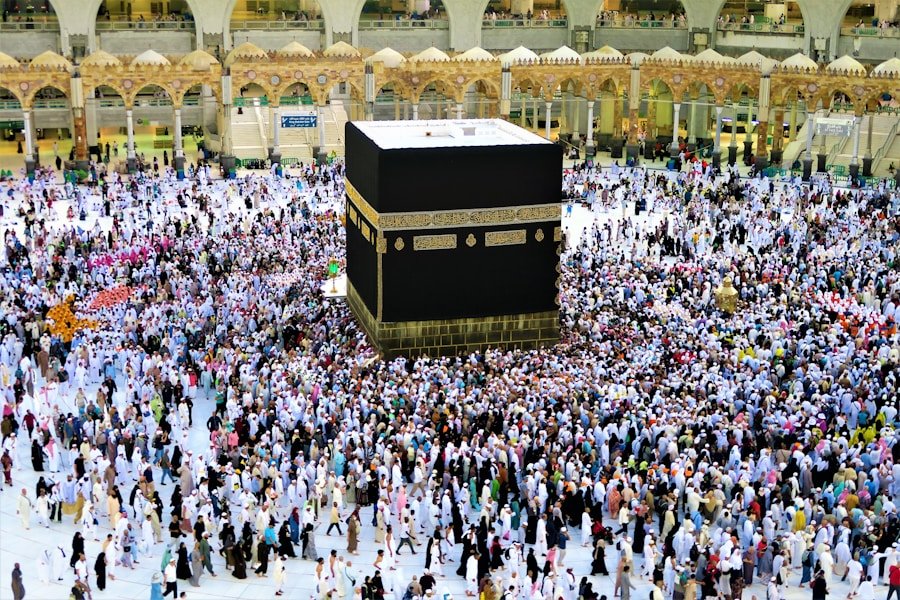

Muhammad, the founder of Islam, was born in Mecca in 570 AD. He was orphaned at a young age and was raised by his grandfather and later by his uncle. Despite his humble beginnings, Muhammad was known for his honesty and integrity, earning him the nickname “Al-Amin,” which means “the trustworthy.” As a young man, he worked as a merchant and gained a reputation for his fair dealings. It was during this time that he met and married his first wife, Khadijah, who was a successful businesswoman.
Muhammad was known to be a deeply spiritual person and would often retreat to a cave in the mountains outside Mecca for meditation and reflection. It was during one of these retreats, at the age of 40, that he received his first revelation from the angel Gabriel. This event marked the beginning of his prophethood and the start of his mission to spread the message of Islam. Despite facing opposition and persecution from the Meccan elite, Muhammad continued to preach the message of monotheism and social justice, gaining a small but devoted following.
The Revelation and the Spread of Islam
The revelation that Muhammad received in the cave marked the beginning of a new era in Arabian history. The message he received emphasized the oneness of God and the importance of social justice and compassion for the less fortunate. This message resonated with many people, especially those who were marginalized in Meccan society. As Muhammad continued to preach, his following grew, and Islam began to spread throughout the Arabian Peninsula.
The early Muslims faced persecution and hardship, but they remained steadfast in their faith. Muhammad’s message of equality and justice appealed to many people, including slaves, women, and the poor. As Islam continued to spread, it also faced opposition from the Meccan elite, who saw it as a threat to their power and influence. Despite this opposition, Muhammad and his followers remained committed to their beliefs, eventually leading to the establishment of the first Muslim community in Medina.
The Hijra: Muhammad’s Journey to Medina
As the persecution of Muslims in Mecca intensified, Muhammad received an invitation from the people of Medina to come and help resolve their internal conflicts. This invitation marked a turning point in the history of Islam and led to an event known as the Hijra, or migration. In 622 AD, Muhammad and his followers left Mecca and traveled to Medina, where they were welcomed by the local community.
The Hijra not only provided a safe haven for Muslims but also allowed Islam to flourish in Medina. The establishment of the first Muslim community in Medina marked a new chapter in the history of Islam and provided a model for how Muslims could live together in peace and harmony. The Hijra also marked the beginning of the Islamic calendar, which is still used by Muslims around the world today.
The Conquest of Mecca
After several years of conflict with the Meccan elite, Muhammad and his followers were able to return to Mecca in 630 AD. Despite facing years of persecution and hardship, Muhammad chose to forgive his former enemies and entered Mecca peacefully. This event, known as the Conquest of Mecca, marked a significant turning point in the history of Islam.
The conquest of Mecca not only allowed Muslims to reclaim their homeland but also provided an opportunity for reconciliation and forgiveness. Instead of seeking revenge, Muhammad chose to show mercy and compassion to those who had opposed him. This act of forgiveness had a profound impact on the people of Mecca and led to many of them embracing Islam. The conquest of Mecca also solidified Muhammad’s position as a leader and allowed Islam to continue to spread throughout the Arabian Peninsula.
The Last Sermon of the Prophet
In 632 AD, just two months before his death, Muhammad delivered his last sermon during his farewell pilgrimage to Mecca. In this sermon, he emphasized the importance of equality, justice, and compassion for all people. He also stressed the importance of treating women with respect and dignity and called for an end to tribalism and racism.
The last sermon of the Prophet is considered one of the most important speeches in Islamic history and continues to be a source of inspiration for Muslims around the world. In this sermon, Muhammad laid out the principles of Islam and provided guidance for how Muslims should live their lives. His message of equality and justice continues to resonate with people today and serves as a reminder of the importance of compassion and empathy.
The Legacy of Muhammad and the Spread of Islam
Muhammad’s legacy continues to have a profound impact on the world today. His message of monotheism, social justice, and compassion has inspired millions of people around the world to embrace Islam. His teachings have also had a significant impact on various fields such as law, ethics, and governance.
The spread of Islam after Muhammad’s death was rapid and far-reaching. Within a century, Islam had spread from Spain to India, creating a vast empire that encompassed diverse cultures and peoples. This expansion was fueled by a combination of military conquests, trade, and missionary activities. The legacy of Muhammad continues to shape the beliefs and practices of Muslims around the world today.
The Impact of Muhammad’s Journey on History
Muhammad’s journey from humble beginnings in Mecca to becoming the founder of one of the world’s major religions has had a profound impact on history. His teachings have influenced countless individuals and societies throughout the centuries. The principles of equality, justice, and compassion that he espoused continue to be relevant today.
The impact of Muhammad’s journey on history can be seen in various aspects such as politics, culture, and religion. His teachings have influenced the development of Islamic civilization and have left an indelible mark on world history. The legacy of Muhammad’s journey continues to inspire people around the world to strive for a more just and compassionate society.